 techiny.com
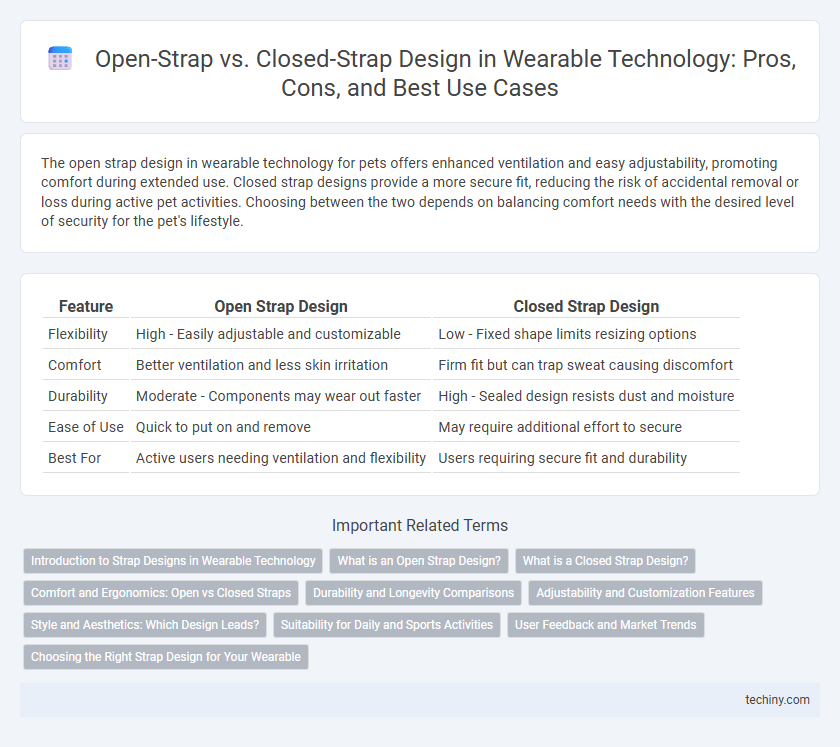
 The open strap design in wearable technology for pets offers enhanced ventilation and easy adjustability, promoting comfort during extended use. Closed strap designs provide a more secure fit, reducing the risk of accidental removal or loss during active pet activities. Choosing between the two depends on balancing comfort needs with the desired level of security for the pet's lifestyle.
Table of Comparison
| Feature | Open Strap Design | Closed Strap Design |
|---|---|---|
| Flexibility | High - Easily adjustable and customizable | Low - Fixed shape limits resizing options |
| Comfort | Better ventilation and less skin irritation | Firm fit but can trap sweat causing discomfort |
| Durability | Moderate - Components may wear out faster | High - Sealed design resists dust and moisture |
| Ease of Use | Quick to put on and remove | May require additional effort to secure |
| Best For | Active users needing ventilation and flexibility | Users requiring secure fit and durability |
Introduction to Strap Designs in Wearable Technology
Open strap designs in wearable technology offer enhanced adjustability and ventilation, making them ideal for active users who prioritize comfort during prolonged use. Closed strap designs provide a more secure fit and streamlined appearance, often preferred for professional or formal settings where device stability is essential. Understanding the functional benefits and user preferences associated with each strap design helps optimize wearable device performance and user experience.
What is an Open Strap Design?
An open strap design in wearable technology features a wristband that does not form a complete loop, allowing for easy adjustment and removal. This design enhances breathability and comfort, making it ideal for users with varying wrist sizes or those engaging in physical activities. Open strap designs often incorporate materials like silicone or fabric to improve flexibility and skin ventilation.
What is a Closed Strap Design?
A closed strap design in wearable technology features a continuous loop that securely encircles the wrist, providing stability and preventing accidental loosening during physical activities. This design enhances durability and is typically favored for fitness trackers and smartwatches that require consistent skin contact for accurate sensor readings. Closed straps often use materials like silicone or leather to balance comfort with resilience in everyday wear.
Comfort and Ergonomics: Open vs Closed Straps
Open strap designs in wearable technology offer enhanced breathability and adjustable fit, reducing skin irritation during extended use. Closed strap designs provide a secure and consistent hold, which can improve sensor accuracy but may cause discomfort in hot or sweaty conditions. Ergonomically, open straps adapt better to varying wrist sizes and movements, promoting prolonged comfort without sacrificing device stability.
Durability and Longevity Comparisons
Open strap designs in wearable technology typically offer greater flexibility and breathability but may sacrifice some durability due to exposed components and less secure fastening. Closed strap designs provide enhanced longevity by protecting internal mechanisms from dust, sweat, and wear, resulting in fewer repairs and extended device lifespan. Materials used in closed strap designs often include reinforced polymers or metal links, which contribute to their superior resistance against everyday wear and tear.
Adjustability and Customization Features
Open strap designs in wearable technology offer superior adjustability through flexible fasteners, allowing users to customize fit for various wrist sizes and comfort preferences. Closed strap designs often provide limited customization, relying on fixed lengths or predefined hole placements that may not accommodate all users equally. Enhanced adjustability with open straps improves user experience by enabling personalized wearability and secure fit during diverse activities.
Style and Aesthetics: Which Design Leads?
Open strap designs in wearable technology offer a minimalist, modern look that appeals to users seeking sleek and breathable aesthetics, often enhancing comfort during extended wear. Closed strap designs provide a more traditional, polished appearance that can complement formal or professional attire, emphasizing durability and a secure fit. Style preferences depend on individual taste, but open straps generally lead in trendiness and contemporary fashion integration.
Suitability for Daily and Sports Activities
Open strap designs offer enhanced breathability and quick adjustability, making them ideal for sports activities that require frequent wrist movement and sweat management. Closed strap designs provide a secure, consistent fit and often better durability, which suits daily wear and activities that demand a stable attachment throughout the day. Choosing between open and closed straps depends on whether comfort and ventilation during high-intensity workouts or firm support for all-day use is prioritized.
User Feedback and Market Trends
User feedback indicates a preference for open strap designs in wearable technology due to enhanced breathability and adjustable fit, which improves comfort during extended use. Market trends show increasing adoption of open strap models, especially among fitness enthusiasts and outdoor users, reflecting demand for versatility and ergonomic customization. Closed strap designs maintain popularity for formal or professional aesthetics but face declining sales as consumers prioritize functionality and comfort.
Choosing the Right Strap Design for Your Wearable
Open strap designs offer greater adjustability and breathability, ideal for users seeking comfort during extended wear or intense physical activities. Closed strap designs provide a sleek, secure fit that enhances device stability and is often preferred for formal settings or precise biometric tracking. Selecting the right strap depends on personal comfort preferences, activity level, and the specific use case of the wearable device.
Open Strap Design vs Closed Strap Design Infographic